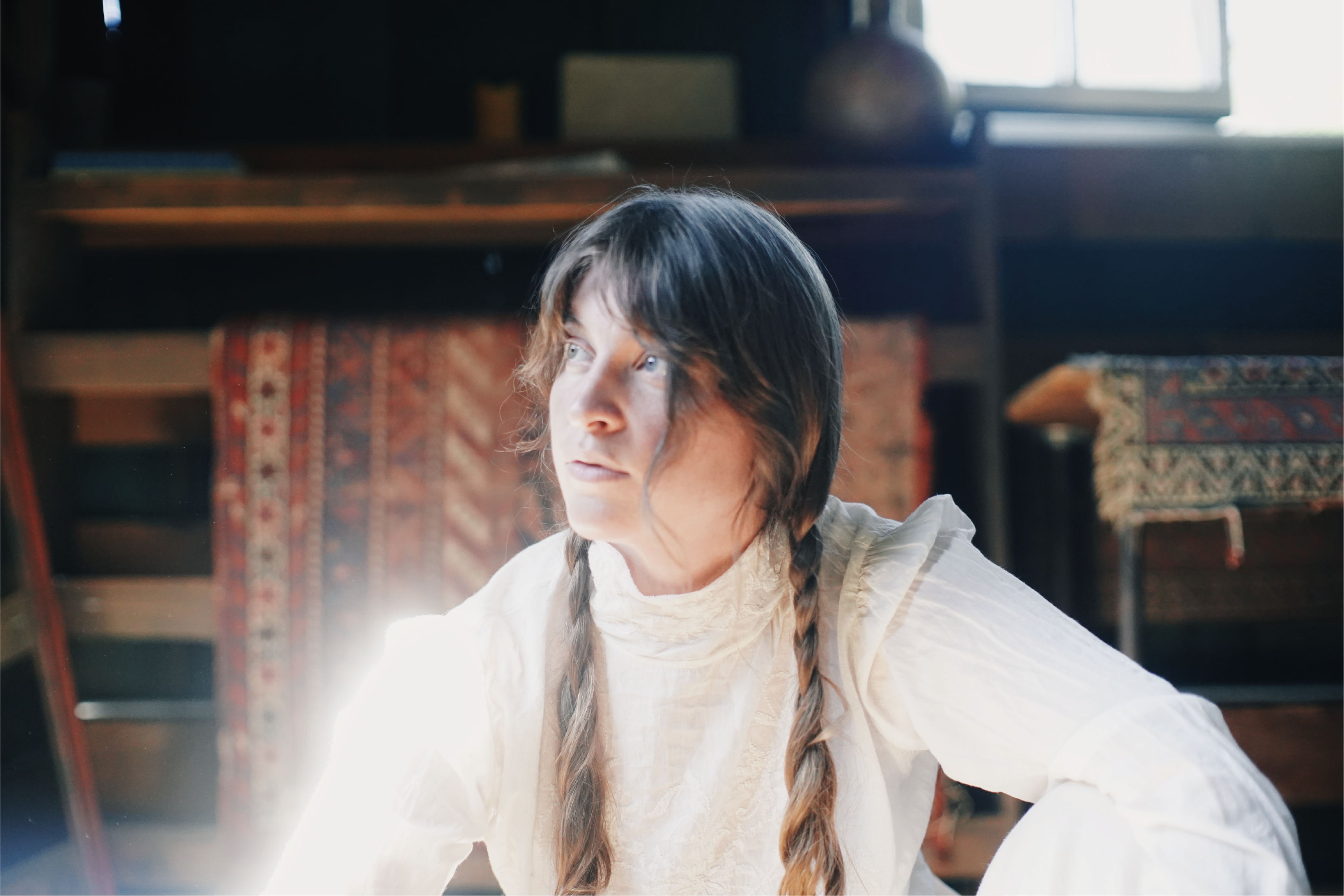
If there is one thing people should know about singer-songwriter Emily Magpie, it’s that she has a lot to say.
Intelligent and introspective, the Bristol-based performer spoke to us last week about her new approach to writing songs, and her upcoming album, “There Are Other Forms Of Strength,” scheduled for release on April 19th.
Emily, your new album is coming out on April 19th. What can fans expect from this upcoming release?
I really challenged myself to be vulnerable. I felt a bit embarrassed to share my vulnerability. I think that’s a good thing!
Before, I felt I shadowed parts of myself that I didn’t want to expose, but then I read what Self Esteem once said, which was, “Keep your lyrics uncomfortable.”
I’ve tried to do that with this album more than ever before. I would say it’s very vulnerable, but in a dream-like way. I let things come out that needed to come out, before shaping the songs from there.
With the dream-like quality of your album, I did feel like I was in a dream listening to “White Heart Rabbit,” especially with the spacey and stripped-back sound.
You’ve previously mentioned finding this “quiet, vulnerable strength.” With that in mind, how much of the sound in this song, and the album as a whole, was designed to reflect this change in your life?
With “White Heart Rabbit,” I started to create the music before the lyrics. It started with the arpeggio synth, which had a cosmic and spacey sound. It was quite meditative listening to the sound, before the lyrics started to come. I guess that’s why it sounds the way it does.
But, apart from that, I create by instinct, so it’s usually never a conscious design. I prefer to go with the flow and then see what happens. For each song, I like to feel as if I’m immersed in a story or concept, and then I chase that feeling when I’m producing, and then the sonic world revolves around it. The sound reflects what the song is about.
It sounds like each individual song takes you on a separate journey.
Yes. That’s the fun of it. I also get to collaborate with Kieran Ball and Max Harrison, who are both amazing. We bounce ideas off each other, so it’s great to have input from two musicians who I really admire and trust.
You’ve also spoken about finding yourself in a more “feminine, dreaming space.” Was there anything significant that happened before the making of your upcoming album that led to this point?
I wouldn’t say anything specific happened. I just like to listen to music that makes me think. I suppose I’m quite a reflective person.
I’m always doing stuff, and if you don’t have a lot in your childhood, you get used to hustling. I don’t really give myself a break. I think the society we live in tells us that we have to do that. To be honest, I was getting sick of living that way. It got to a point in my life where I decided I wanted to change things.
My own journey over the years has realised that sitting still isn’t doing nothing. Listening to yourself is important. I wanted to challenge myself personally and go further down that road; that’s when I started to write these new songs. Creating this album has changed me as a person.
Compared to when you said you used to be more focused on the masculine side in your life of “doing, doing, doing,” is your new batch of songs an attempt to explore femininity in ways that you haven’t done before with your music, and, being a woman, was this also a way of fighting against a male-dominated world?
100 percent. I’m a massive feminist. I care about all minorities who are not treated properly across-the-board. I always want to rep the underdog. This album celebrates putting forward feminine values that have been forgotten in our society. We need more compassion, reflection, and vulnerability, especially with all that’s going on in the world right now.
I read a lot about the history of women in our society, and our society wasn’t always patriarchal. We used to be a lot more pagan-leaning, until the witch-trials, which was about the church wanting to take power away from the midwives. You’ve always got to look back at history to understand where we are now.
Has that idea of promoting change always been something important to you? Do you always look to channel that into your music?
Definitely. Sometimes I question myself or what I’m doing. When you look at art and culture, there’s been so many songs or books that have shifted the way I think about things. If I can try and use my art to say something important, even if it connects with just one person, then that’s great. Art has always been massively important to help people feel seen and heard. If people feel a certain way, it’s nice to know that there’s spaces out there that hold room for that.
Is this also important to you on a general level, especially being a woman who has broken into the music industry?
Yeah, it’s important to me. It’s massively important that I create community with women, non-binary, and other people in minority groups. I love men, too, but the balance isn’t fair. That’s what I want to change.
As a woman in the music industry, what’s one thing you know now that you wish you knew when you first started out?
Impostor syndrome is not my fault. As a woman in the industry, I think it’s very easy to feel uncomfortable in certain spaces. It’s no surprise that you feel uncomfortable in those spaces, and you should be proud of yourself for sticking it out.
I suppose it’s easy to feel like you don’t belong somewhere if an industry, alongside society as a whole, is telling you that you don’t belong in that place.
The thing is, it’s quite indirect and insidious. I recently spoke at a university, and I was told by a girl studying production there that she was the only girl on her course. All of the coursemates and tutors were men.
If you don’t see people that look like you in these spaces, it’s hard to imagine yourself there. It gets inside your head; you don’t realise that you don’t feel you belong there.
Finally, any advice to women entering the music industry?
Reach out to other women. I found that there’s some beautiful communities. The people who are less represented really want to support each other, and you can chat about the bullshit!