
New Interview: Emma Bradley

New Interview: Emma Bradley British singer-songwriter Emma Bradley has never shied away from vulnerability, but her latest EP, Winona’s World, marks a bold new chapter—one that embraces shadow, solitude, and self-definition. Inspired by sonic auteurs like Imogen Heap, James Blake, Bon Iver, and Danny Elfman, Winona’s World is a cinematic, emotionally charged journey through themes of abandonment, queerness, mental struggle, and bittersweet memory. 19 May 2025 By Isaac Phelan Currently Listening to: What began as a reckoning with artistic identity—intense enough that Emma briefly considered changing her name—transformed into the creation of Winona, a fictional alter ego who gives voice to her darker emotions. Through this character, Emma explores the parts of herself often hidden or “swept under the rug,” using music as both refuge and revelation. Self-produced and independently released, the EP not only showcases Emma’s evolution as a musician but also marks her reclamation of creative control. I sat down with Emma to talk about the making of Winona’s World, building sound from silence, and why stepping fully into her own name — and voice — might be the most radical act of all. Winona’s World emerged from a deeply introspective period where you considered creating an entirely new persona. Can you share more about what sparked this urge and how you eventually reconciled with staying true to Emma Bradley? I made this EP honestly nearly by accident. I was in a very strange place where I felt really creatively uninspired, and nothing I made was feeling good to me. I was also pretty burnt out. I started messing around on my laptop and writing in a really different way from how I’ve previously approached making music, and that somehow triggered such a different sonic. When I had finished the final demos of the project, I felt a bit like… this was a big departure from the music I had out, but also this feels like music I’ve always wanted to make. It felt too different to my other music at first and also felt a bit too vulnerable, so I decided to release it anonymously under another name, ‘Winona’. She’s like my shadow, and I gave her all the darker feelings that I had carried around and had followed me in my life. I sat with it for months and months and got really close to releasing it as a side project. But after playing the music to some people and seeing the reaction, I was like wait, I am really proud of what I made and I want to own that. People were like ‘Emma don’t be stupid, you have to release this yourself’, I’m glad I listened to them. The EP explores themes described as “shadows of a feeling”—emotions often neglected or suppressed. How did immersing yourself in these emotions impact you personally and creatively? I think giving myself the space to be entirely honest with myself was very freeing and healing. I think I was too scared to go there in my music previously. But music has always been how I process things, and making music alone like this really allowed me to do it fearlessly without thinking ‘ah, is my co-writer gonna think this or that about me’. I tackled some topics on this project that I definitely wouldn’t have felt comfortable really delving into in a writing session, to be honest. The whole process has made me feel a lot more confident in myself and how I want to express things / how my own ideas for production and writing are just as good as anyone else’s ideas. ‘That Door’ is improvised, actually, I’m pretty sure the final vocal on there is literally the first thing that came out of my mouth when I hit record. So yeah, the whole thing was definitely intimate haha. In creating the alternate world inhabited by Winona, did you find yourself drawing from fictional inspirations or real-life experiences more heavily? I have been hugely inspired by Tim Burton films for my entire life. Alongside that, I’ve always been drawn to magical, eerie films like Coraline, E.T. and Donnie Darko etc. Those films are kind of my creative blueprint. I learnt piano by listening to film scores until I could play them. So I definitely was drawing from those worlds when I was making this project. It’s all super abstract but the actual meaning behind the songs is very rooted in and inspired by my real-life experiences. So I guess it’s a mixture of both. You mention artists like James Blake, Imogen Heap, Bon Iver, and Danny Elfman as influences. How did these influences guide the evolution of your sonic style on this EP? I am such a massive fan of all of those artists and I think I had just listened to their work on repeat especially during the time I made this EP so it felt like accessing that influence came quite subconsciously. Danny Elfman is a big one, especially on Bad Apple. I wanted that song to feel like a film score. His work makes me feel everything. Also, the plug-in I used on my vocals throughout the project was very Imogen Heap / James Blake / Bon Iver inspired. I never really want autotune on my vocals when I make more singer songwritery music but for this, it felt like it was just part of it and it kind of sets the scene sonically. I think all of those artists are just really unafraid to do something different and it made me not overthink my choices when I was writing. Like not once did I think ‘Is this too weird?’, I just sort of rolled with it and it was a lot of fun. Departing from your label and management to produce independently sounds both liberating and daunting. What were the biggest creative challenges you faced, and how did overcoming them shape your music? Honestly, creatively I didn’t really feel any challenges. I sort of just did my own thing and didn’t
‘My producer and I had a phrase whilst creating the album, mouldy cream doughnut’: Interview with Joni on Her Debut Album ‘Things I Left Behind’
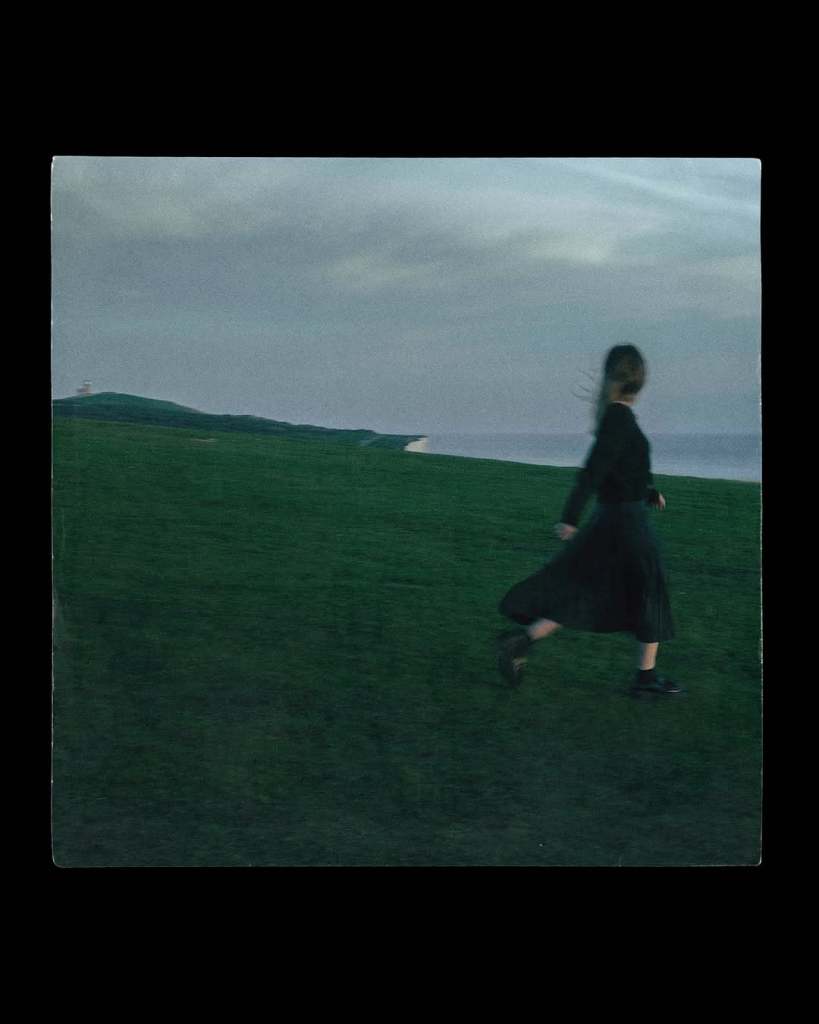
‘My producer and I had a phrase whilst creating the album, mouldy cream doughnut’: Interview with Joni on Her Debut Album ‘Things I Left Behind’ In light of her debut album, “Things I Left Behind,” we spoke to the American-born vocalist and songwriter, Joni, who discussed her creative journey following her heartbreak, the “mouldy cream doughnut” that shaped her album and more… 11 April 2025 By Jack Webb Currently Listening to: Joni, your album, “Things I Left Behind,” will be released tomorrow on April 11th. What can fans expect to hear? That’s hard to distill down to a few sentences. I guess fans can expect to hear a good variety of songs because this album was a big subject to tackle, with it being centred around my first heartbreak and the subsequent feelings of loss. I was going through a lot of change and growth in a short amount of time, and I think that can be seen with the big spread of songs, sonically. My producer and I had a phrase whilst creating the album, mouldy cream doughnut. That’s why my voice is sweet-sounding, we wanted to pull on listeners’ heartstrings, while the music feels a little off, a little mouldy. Nothing too perfect. That was how we guided the album regarding its sound. Your voice on the record is quite child-like. Musicians often talk about healing their “inner-child” in terms of their emotional journey. Although that’s not quite what you were doing on the album, to what extent was your voice partly reflecting that process? It’s funny because I have no idea how I sound – I just sing. You can’t judge your own voice, and I don’t think you can judge your own art too much. It’s always nice to hear outside perspectives, but for me it’s just my voice. It’s the only one I have! What helped me was finding a producer who could hold up a mirror and show me who I am as an artist. That was important, because it’s difficult to create when you try and do everything yourself. It feels like it alongside the healing process of your heartbreak. You were kind of on, like a developing process, musically. In terms of your music as well, particularly given that this is your first solo album. Did you, at any point, feel that these two journeys were happening at the same time? I guess it’s funny because the person that I was with for a decade of my life, and who the album is centered around, was my producer who I worked very closely with. Alongside our personal relationship, we had a working relationship, too. So, when everything fell apart I felt very lost within my own music. When you make music with someone you’re in a relationship with, the two of you begin to mould into one person, in a way. I lost a big part of myself – it took a while to get that back. I began to realise that my music wasn’t only good because of them. That was when I began to play songs on my own, acoustically, and people reacted well to them. Acoustic songs can be very good at evoking raw emotions, and in your case with your acoustics they appear to reflect an understandable feeling of emptiness. As I’ve said, making this album was very healing. I didn’t want to feel like all the pain that I had at the time was for nothing, so to take that pain and transform it was very satisfying. That’s not to say it didn’t take time – I didn’t immediately think to use this experience to start writing songs. I was very sad for a long time, but then I started to slowly write songs that would surprise me. A lot of times in the past I would write songs from an outsider perspective, things that weren’t really my experience, perhaps as a protective mechanism. But, once I went through my heartbreak, I felt like an artist who had something to say. My songs started to have little details in them in a way that they didn’t before. A lot of musicians rely on their personal pain to be able to create, but this seemed like a new process for you. Regarding the lyrical content, how was your approach different when making your album, compared to your collaboration days? You know, it wasn’t a conscious decision. It wasn’t until after I had written the songs when I realised there was less of a wall up in the songs. One of the tracks on the album, Strawberry Lane, contains lots of details from real events in my life. The title is an actual address. Not to say that I wouldn’t have written that song in the past, but when I did, the words came out very easily. Being American-born and now based in the UK, are familiar with the concept of leaving an old life behind and starting anew? If so, has that always shaped your music? Growing up, my Dad was a submariner, so we moved around a lot – every two or three years. It was weird because every time you leave a place you can reinvent yourself and begin with a clean slate. I’d approach things as an outsider, too. When you move around a lot you learn to look at the world and see what it’s like, so I think I’ve always been observing things. But then, you start to write about other perspectives and things that you see as opposed to your own internal experiences. London has given me another fresh start, which I needed after my heartbreak. I’m trying to stay more rooted now, and not run away when things go wrong! As we’ve already spoken about, part of this album’s journey involved finding your own voice. Being a woman in the music industry, how important is that feeling to you? I think women are less comfortable claiming their own space sometimes.
“I spent so much time in the city and it inevitably has had an influence on who I am and my sound.” Interview with better joy

“I spent so much time in the city and it inevitably has had an influence on who I am and my sound.” Interview with better joy Last week, I had the pleasure of interviewing better joy, an exciting rising artist whose distinct alt-pop sound has quickly caught the attention of indie enthusiasts and critics alike. Her music beautifully balances gritty guitars and captivating melodies, elevated by Bria Keely’s honeyed vocals and insightful, vulnerable lyrics. 22 March 2025 Words by Isaac Phelan Currently Listening to: better joy has been described as a roller coaster ride, offering unexpected twists that thrill listeners and defy expectations. With nods from tastemakers at BBC Radio 6 Music, NME, and DIY, she is swiftly emerging as one of the UK’s most anticipated indie breakthroughs. During our conversation, we discussed her new single “quiet thing,” an introspective track highlighting the understated beauty of everyday moments in relationships, perfectly demonstrating her knack for nuanced storytelling set against a backdrop of energetic, intricate instrumentation. Bria, your project better joy launched in late 2023 and quickly gained comparisons to iconic bands such as The Cure and The Smiths, as well as contemporary voices like Phoebe Bridgers. How do you personally relate to these comparisons, and do they influence your creative process? It’s a bit wild that those comparisons happen, to be honest – and if I think about it too much, I get into imposter syndrome territory. It’s flattering that people compare me to those bands and I was listening to a lot of those bands when I started writing music, so it’s cool if those influences have come through in the music. I think vocally, to be compared to someone like Phoebe Bridgers is an honour, I love her so much! Your first release of 2025 was the single ‘waiting on time’. What inspired this track, and why did you choose it as your initial release for this year? I wrote this song with my friend, Michael Champion (Wet Leg, Champs Champs) and my drummer Jamie Ford, and they’re two people who I love working with. We were just jamming in my garage and we came up with the music, didn’t think much of it. Then we just couldn’t stop thinking about the song, so we worked on the lyrics and it developed into something that’s so fun and uplifting. I loved the process of writing this song, and I think it holds happy memories for me – it makes sense that I started my EP campaign with such a positive force. This EP has been a really positive and exciting experience for me, it feels right that we started with ‘waiting on time’, a song about waiting for the right moment. It felt like the right moment to release it. This is a favourite to play live. Growing up in Cheshire, a stone’s throw from Manchester, you have undoubtedly been surrounded by some of the richest musical culture in the world: The Stone Roses, Oasis, Take That, The Chemical Brothers and on and on… Do you often find yourself feeling romantic about your life there, and does that energy bleed into your sound? I spent so much time in the city and it inevitably has had an influence on who I am and my sound. I am very proud to be Northern and proud of the musical history we’ve got. I’m definitely inspired by that Northern grit which is in so much of that music, I think music made in Manchester has a lot of soul and I hope that type of energy bleeds into my sound. View this post on Instagram A post shared by better joy (@betterjoymusic) Your latest single, ‘quiet thing’, explores the understated moments in relationships. Can you discuss how personal experiences shaped the storytelling in this song? So this song was inspired by a conversation I had with a close friend who had recently lost their mum. They were telling me that their relationship with their girlfriend was ‘quiet’ right now, but that it was getting him through that period. It made me think about how we always romanticize the big moments in relationships, when actually sometimes the most romantic moments are the quietest ones. You’ve mentioned the intention behind pairing the sweetness of the lyrics with gritty instrumentation in ‘quiet thing’. What was the creative process behind achieving this musical contrast? I didn’t want to write a ballad, I wanted to write a love song that people could dance to. The gritty guitars naturally make ‘quiet thing’ less ballad-like, and that was our intention when producing the song. Your debut EP, ‘heading into blue’, produced by Mike Hedges, is set for release on March 28th. How did collaborating with Mike, known for his work with artists like The Cure and U2, influence your artistic direction? Working with Mike is still a big pinch-me moment. With everything he’s done, I was a bit in awe of him to start with – and still am! – but he’s the loveliest person to work with, really encouraging and insightful. And his influences had a massive effect on the music. There was a night we were talking about Fender bass amps that were used in some of his Cure records and we were like, we have to bring them into these songs. View this post on Instagram A post shared by better joy (@betterjoymusic) The EP includes previously released tracks ‘waiting on time’, ‘carnival’, and ‘what a day’. How do these tracks collectively set the stage for the overall narrative or emotional arc of the project? They’re a taster of what better joy’s all about. They were all written at that point in my songwriting journey where I was starting to believe in myself as a writer and each song holds a special place in my journey. This EP feels like the first introduction to better joy. Two new tracks, ‘couldn’t run forever’ and ‘can I land the plane?’, are debuting on this
An interview with the alternative folk artist REA ahead of her debut EP release ‘Garden Shed’

An interview with the alternative folk artist REA ahead of her debut EP release ‘Garden Shed’ Brighton-based artist REA confides in quiet outdoor spaces when writing her alternative folk music. She blends sounds of flowing rivers, falling rain, and birdsong with stories written in the solitude of her Dad’s garden shed. 21 March 2025 Words by Nat Kossyvaki Currently Listening to: REA’s forthcoming debut project, ‘Garden Shed’, produced by Josh Harrison (The Cure, Royal Blood, Lovejoy), is an experimental venture rooted in nature. With songs recorded in a secluded woodland in the South Downs, the 4-track EP carries a raw, earthy nostalgia, reminiscent to indie folk projects of Bon Iver, Adrianne Lenker, and Hana Stretton. I had the pleasure to speak with the Brighton-based artist about the making of her debut EP, her music influences, as well as her identity as an artist and finding her true sound. What were your main music influences growing up? I feel like for me it changed a lot when I was growing up. First artist I remember listening to was KT Tunstall, a singer/songwriter who is kind of pop-rock, and then I shifted to a softer era like Gabrielle Aplin and Daughter… but then I shifted again towards an indie-grunge phase when I was 17. I was constantly going to gigs in Birmingham. There was a band that was very big called Jaws, which I saw so many times! After that, I think I returned to my softer roots and I started discovering Bon Iver and The Japanese House in this kind of alternative folky scene. So yeah, I shifted around a lot when I was growing up, but it did start with KT Tunstall – she was my idol! I wouldn’t say that we share the same musical ‘vibe’ now, but I did have and still have a real appreciation for female guitar musicians. I realise now that all my playlists are full of women who play guitar, so yeah, in that sense, she was a big influence for me and I still love her. She’s great. Did anything or anyone in particular inspire you to start your music journey? So my parents weren’t exactly musical like they wouldn’t write music, but they were really into music, so I had a lot of music around me growing up. My grandad on my dad’s side however, was a big music head and loved jazz, and my grandparents on my mum’s side were in church choirs, my grandma sang and my grandpa played the organ. All three of them inspired me to do music, so I think deep down I was slightly trying to impress them growing up! And what pushed you to start making your own music? I think I’ve always been writing songs. When I look back, the first song I wrote was probably when I was about 13, and when I got to about 16 that’s when I properly started writing music, so it’s something that has always been happening for me. What pushed me more was probably the shift from musical theatre which I used to do, to starting to play my own music. The only way I could do singing was through musical theatre, but I soon realised that I don’t have a musical theatre voice and something wasn’t quite clicking with me. I think that’s when I started to do my own thing, because I really enjoyed singing and indie-folk music; I don’t remember the exact moment I decided that I’m going to do music; it just started happening. I think it was probably the rejection of musical theatre that made me want to pursue singing my way, without feeling like I’m not good enough to do it. How would you describe your music in 3 words? I would say earthy, raw and nostalgic. Someone once described it as intimate and expansive, and I think that also represents it well because that’s what I’m trying to do. Vocally and lyrically it’s intimate, but then production and instrumentation are big and expansive. I don’t know how many words I’ve given you now, but you get the idea! Who is REA? Is she a separate persona to you that defines your music? So, REA is my initials. It’s really weird because when I was younger and I used to write my initials I always thought that would be my ‘thing’. So when I started to put music out, it really made sense to me to do it as REA. I do think she is a separate persona, and it’s necessary for me, especially because of the music I write, which is quite confessional and personal. I needed this separation of the two to compartmentalize it and allow myself to be vulnerable in that REA space whilst allowing myself to live my life and do other things as Rachel. For example, I don’t resonate with REA in a workspace, so it’s funny when the two collide! I used to really struggle when REA would get brought up in a Rachel environment, like people would ask me “do you do music?” and I’d say “oh no I don’t!”. But I think now I’m a lot more comfortable with that. Do you think you’ve found your sound as an artist so far? I always felt there are different directions REA could go down, but right now I’ve found the sound and its foundation from where it could take off into loads of different ways. I think a lot of that was down to the two people I worked the most closely on the project which was Josh Harrison and Leslie Adriaans. They both really nurtured the demos I brought to them and also encouraged me to experiment with other things like field recordings and voice notes. We experimented with a bunch of different ‘indie’ approaches to the tracks, some with drums, some that had more of a ‘band feel’, but I think ultimately our favourite versions of the songs were the ones
“it really helped me turn my feelings around and help me shift into a positive mindset.” Interview with Orla Rae
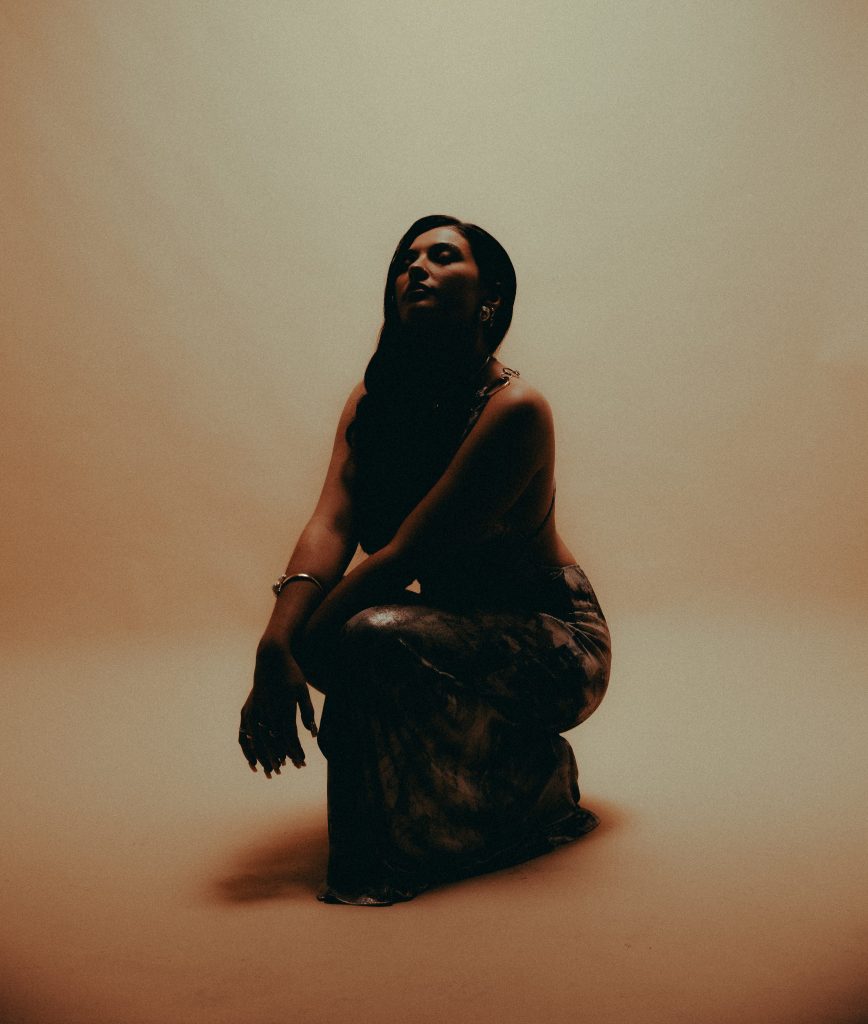
Orla Rae has explored a sonic landscape revolving around her vocal abilities,
fusing jazz, R&B and soul to forge a sound that has landed her in the open arms of BBC
Radio 1xtra and BBC Introducing – a string of wins that is sure to continue with her latest
offering ‘FOMO’.
Caldera Songwriting Retreat: a haven for songwriters tucked away in the Aegean Sea
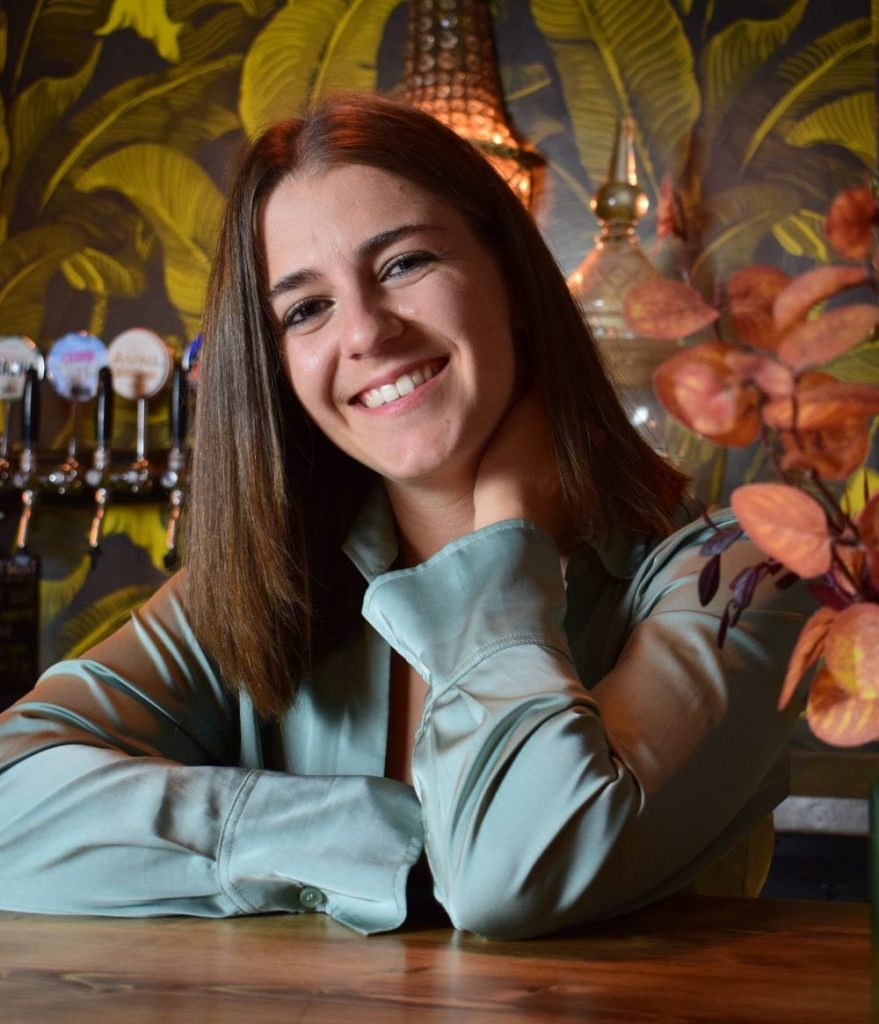
Photo by By Nat Kossyvaki Caldera Songwriting Retreat: a haven for songwriters tucked away in the Aegean Sea In a world where time seems to fly, it’s easy to lose touch with the present moment. Caldera Songwriting Retreat brings in a new approach to reconnecting with creativity and helps artists slow down by nourishing the mind, body and soul, working towards reconnecting with their inner selves, and enhancing their creative outlet through an immersive and holistic songwriting experience. 9 March 2025 Words By Nat Kossyvaki https://www.youtube.com/watch?v=BpTTtdKdq24 Based in the beautiful island of Santorini, away from the burdens of everydaylife, the Caldera team provide you with the time and space to explore yourcreativity and songwriting passion, so you can finally make yourself yourpriority! I met up with one of the founders of Caldera, Io – a session bass player and music professional from Greece based in Brighton – to discuss the vision behind Caldera and the benefits it can offer to songwriters. Io is also the owner of the promotions company “Beluga Promotions” which runs acclaimed open mic nights in Brighton, helping local artists showcase their music. What is Caldera and what inspired this vision? Caldera is a songwriting retreat which was mainly inspired by the open mics that we run in Brighton. Through these open mics, we get a lot of people who come in and they all have a story to tell. You don’t really know the people who come to these open mics until they get on stage to perform, so you can actually learn a lot about those people through the songs they play. The open mics have become sort of like a community and for a lot of artists, performing there provides a sense of ‘therapy’. Both myself and Erini (the co-founder of Caldera) believe that writing songs is truly a form of therapy; there are things that you can’t really express with just words and for some people, songwriting is something much deeper that they can express and share with the world in a much more creative way. Also looking at my own lifestyle, how busy it is and how pressuring the music industry can be, we wanted to create a space where songwriters can come and be free. They can be in an environment where there are no external pressures or life responsibilities, and they can just explore their creativity and be completely free. So Caldera is basically a space for artists to experience that therapeutic moment and make themselves a priority. What does the name Caldera mean? Caldera is actually the most common word you will find in Santorini! It is what remains of the volcano after the explosion and has made Santorini famous for that. In 1600 B.C. there was a huge explosion of the volcano that destroyed half the island and the civilisation on it, but it has made Santorini very unique and now one of the most popular destinations in the world. For our retreat, caldera stands as a metaphor; because Santorini has this history of destruction and rebirth, we thought that doing the retreat here could resonate with the creative songwriting process of many artists. Musicians and songwriters have all these things they want to express but it sometimes can be too difficult and can’t find the words for it. At Caldera retreat, they can take something difficult or ‘painful’ and make something beautiful through music. What makes Caldera unique and stand out from other songwriting retreats? Definitely the location! It’s hard to describe it without seeing it; for me, it’s one of my favourite places on earth. Also, the way we run the retreat doesn’t only focus on the songwriting but on the well-being of the artist too. So we have a lot of things incorporated within the schedule of the retreat which promote well-being, both physical and mental, and also promote the ancient Greek saying “a healthy mind is a healthy body”. So Caldera aims to inspire people to write their songs and also to nourish their spirit; to make themselves a priority. That is why, you don’t have to come to the retreat and leave with a finished song. Even if you come and get inspired and you get a million ideas, but you don’t finish a song that’s fine, because the goal is to get inspired and relax and come up with something that you can then use to inspire yourself in your creative journey. Songwriting retreat 2024 – Group dinner and song-sharing session What does a day in the retreat look like? We would start with mindfulness. So, the first thing in the morning would be going down to the beach, which is literally at our doorstep(!) and do a bit of meditation and mindful movement like stretching or a light version of yoga to connect your mind and body, and really focus for the day. After that, we can have a small break for everyone to have breakfast or a shower if they want, and then we start with the songwriting workshops which will be run by a professional songwriter. We will be running a lot of classes and workshops that people can attend, as well as a lot of inspirational activities where we’ll be talking about lyrics and melodies. Then we have a lunchbreak prepared by our private chef, so everything will be prepared for you and you won’t have to worry about food. All recipes will be plant-based and inspired by the Mediterranean cuisine, to experience a complete detox for your mind and body. During the day, people will also have a lot of downtime to relax and spend some alone time if they need it, to write songs and collaborate with other artists. And eventually, in the evening, we’ll have jam nights, gatherings at the beach and group dinners! On some days we’re also planning on doing some inspirational activities, one of which is both mine and Erini’s favourite! We’ll take the guests to the Symposion Cultural Centre, which
Natalie Wildgoose- I’ve always had an obsession with older generations

In light of her upcoming EP, “Come Into The Garden,” and her subsequent tour, we spoke to London and North Yorkshire-based vocalist and songwriter Natalie Wildgoose, who discussed her upcoming plans, the inspiration for her new music, and more…
It is exceedingly rare to discover an artist who is so responsive to evolution, and Taloula is one such extraordinary talent.

An independent singer, songwriter and producer, her vibrant, free-form musicality instantly marks her as one of the brightest musicians emerging across the R&B landscape right now. Her new album ‘T.E.O.T. II’ (The Evolution Of Taloula II) embodies authentic R&B and soul while balancing psychedelic textures co-produced by Taloula that feel as nostalgic as they are contemporary. Empowering vulnerability and the exploration of our existence, Taloula’s sonic journey towards inner peace will continue the heat surrounding one of London’s key new names crashing into wider consciousness.
Leibniz – Shut Up The World

Image credit: Jake Reid Leibniz – Shut Up The World 27 September 2024 Leibniz are a quick-rising Brighton trio that have captivated the grassroots music scene, with their infectious live energy and raw emotion making the ‘grungecore’ newcomers an essential addition to the artist radar. Words by Kristian Floate https://www.youtube.com/watch?v=J94fsi6pXCk Expect unfiltered anger and pain – bursting from the seams of a discography that doesn’t tip-toe around difficult subjects, but tackles them head-on. From transgender liberation and healthcare to mental health, Leibniz are highlighting the sometimes bleak reality of these topics, plating them up in front of diverse audiences and creating meaningful and essential conversation. Easing in with a squeaky clean octave melody, the trio don’t bother hanging around with gradual build-ups and steady interludes – cascading into full chaotic breakdown within the first few bars and maintaining an unmissable potency from start to feral finish. With Leibniz’s upcoming debut EP ‘Lifetime Patient’ encapsulating the ‘sonic expressions of trauma’ and playing homage to growing NHS waiting lists – their first single is a welcome introduction to a band who won’t hesitate to let their guard down and share the unfiltered truth. Written during a panic attack, Erin says – “I was literally having a meltdown when I wrote ‘Shut Up the World’. I just needed to release all this confusing energy and tension, and I think this song really represents the feeling of being overstimulated and unable to do anything about it, all I want is to shut up the world around me and shrink inside myself but all I can do is scream”. If the pained screams of lead vocalist Erin Munn aren’t enough to communicate the deep-rooted frustration and confusion catalysed by feelings of overstimulation in a deafening world, their lyricism is sure to do just that. Desires to ‘turn off my mind’ and regain control are deep-rooted from the very first note, and the relatability of these themes are ones that have earnt them deserved spaces on local + national stages, from supporting Brighton’s Belmondo on September 8th to riot grrrl legends Pussyliquor earlier this year. https://www.instagram.com/p/DAajBMStJJ0/ The unstoppable forces of Erin, Jack and Elisha have also turned the heads of Brighton’s Small Pond Studio, and their contribution to the critically acclaimed ‘Emerging’ program with 2023’s ‘Cold and Calculated’ has sent seismic waves across the country and established the band as ones to watch. Paired with their DIY follow-up ‘No Body No Home’ in early ’24, Leibniz are forging a discography that compiles elements of grunge, shoegaze and hardcore effortlessly, while showcasing a sound that continues to mature and diversify in technicality and complexity. ‘Shut Up The World’ will be released on September 27th, and the full EP ‘Lifetime Patient’ will hit the airwaves on 11th October – paired with physical cassettes and unannounced live shows. You might also like ˗ˏˋ ★ ˎˊ˗ Recent Posts ⋆⭒˚.⋆
NATTY LOU: “It meant that I only had one day to plan my set and little time to practice, but it turned out to be one of the best sets I’ve ever played.”
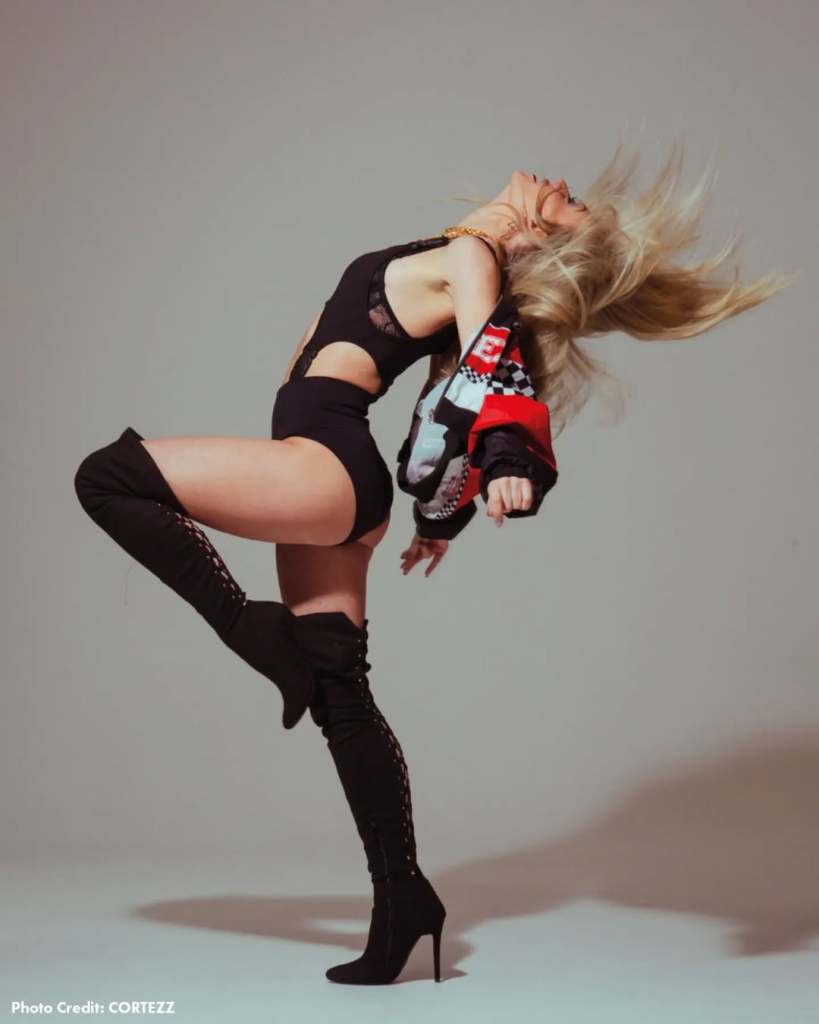
“It meant that I only had one day to plan my set and little time to practice, but it turned out to be one of the best sets I’ve ever played.” 26 September 2024 A conversation with Natty Lou, the natural-born performer turned global trailblazer of drum and bass, as we dive into her unforgettable Boomtown Hidden Woods set and her journey through the worldwide rave scene. Words by Isla Mcrobbie Your set at Hidden Woods had the most packed crowd I’ve ever seen! How did this year’s show compare to others? Honestly… best set of the summer! I was incredibly nervous because my hard drive containing all of music had broken a week before Boomtown and I had to take it to the computer repair shop. It meant that I only had one day to plan my set and little time to practice, but it turned out to be one of the best sets I’ve ever played. Texas MC was supposed to host my set that night, but he couldn’t make it due to an injury, so Tiny K jumped on last minute. As you can imagine, the lead up to the night was quite stressful, but as soon as I was on the decks, in front of that crowd, Ifelt at ease. Boomtown is my favourite festival in the UK – the vibes are just something else! I love how much time and effort they put into their production – the performers, the stage design, the secret stages… I can keep going! I’ve been super fortunate to have played Boomtown three times now and each year it keeps on getting better and better. It really has the best crowd – I still get people coming up to me at events saying that my set was one of the best sets of the weekend and it makes me happy to hear that. I’m really hoping to make it onto Origin stage one day…cross fingers! We loved the video of two fans raving during your set. How does it feel to see a sea of people having the time of their lives to your soundtrack? Haha I am so glad you captured that video! It makes me so happy to see everyone dancing, having a good time and enjoying my selection. I think it must have been the biggest crowd that I’ve ever played to. It felt so surreal seeing all those people out there who came to see me play. I find it difficult to take it all in whilst I’m playing because I’m so focussed on mixing and not messing up. It’s only until after my set that I think “wow, that was incredible!”. I couldn’t believe it when people were saying that there was a queue to get into the Hidden Forest during my set. Looking back at my friend’s videos, it really put things into perspective. View this post on Instagram A post shared by NATTY LOU (@nattylou_dnb) Your background as a dancer seems to add to your energy and stage presence behind the decks. How much of your set is improvised, and do you like taking risks during your performances? Thank you. I often get commended for my high energy behind the decks. I believe that I wasborn to perform, and I can’t help but dance to the tracks that I love. I’m super passionate about what I do, and I hope that shines through whilst I’m playing. I plan all of my sets but often change and adapt them when I feel that it’s necessary. I think it’s important for a DJ to be able to think on the spot, for example about what’s working and what’s not. It really depends on the crowd, where you’re playing and at what time. These are all factors I take into consideration. How did you start your journey as a DJ? What made you switch from dancing to mixing, especially starting in Hong Kong just before the pandemic? I started learning how to mix in 2018 whilst I was living in Hong Kong. I was a touring backing dancer back then, so it was hard to find the time to fully focus on it. Then the pandemic came, and I moved back to the UK. I was unemployed so as you can imagine, I had a lot of time to practice, concentrate on the craft and build up my skills. I started streaming my sets online, entered several mix competitions, and had the support from brands such as ‘Concrete Junglists’. I still dance and take on jobs from time to time, however, I’m fully focussed on a career in music now which, I feel, has more longevity. Your tracks “Alpenglow” with Lottie Jones and “Galactic” with Sebotage are amazing! When can we expect more singles? Are you working on anything new? Thank you! Yes, I’m sitting on so much music right now. I have music coming out with Tengu, D*Minds and up and coming producer, Leemo. I’m working with incredibly talented vocalists such as Mila Falls, Nathan Smoker and Ayah Marar. My release schedule is already looking busy for 2025 – I’m so excited for you all to hear! Your music is rooted in DNB, jungle, liquid, and other sub-genres. What’s your current sub-genre obsession? I love all sub-genres of Drum and Bass, but I mainly produce melodic, dance-floor Drum and Bass with powerful vocals. I make music that is uplifting, energetic, includes melodic hooks, atmospheric pads, a catchy topline that people can sing along to, and drums that people can dance to. As a magazine promoting UK female, non-binary, and trans artists, could you shout out another DJ, selector, or musician making waves in the industry? Or is there a track you currently have on repeat? Firstly, I’d like to give a shout out to the likes of Storm, Kemistry (RIP) and DJ Rap who have helped pave the way for females in Jungle & Drum and Bass. There are so many artists making