It is exceedingly rare to discover an artist who is so responsive to evolution, and Taloula is one such extraordinary talent.
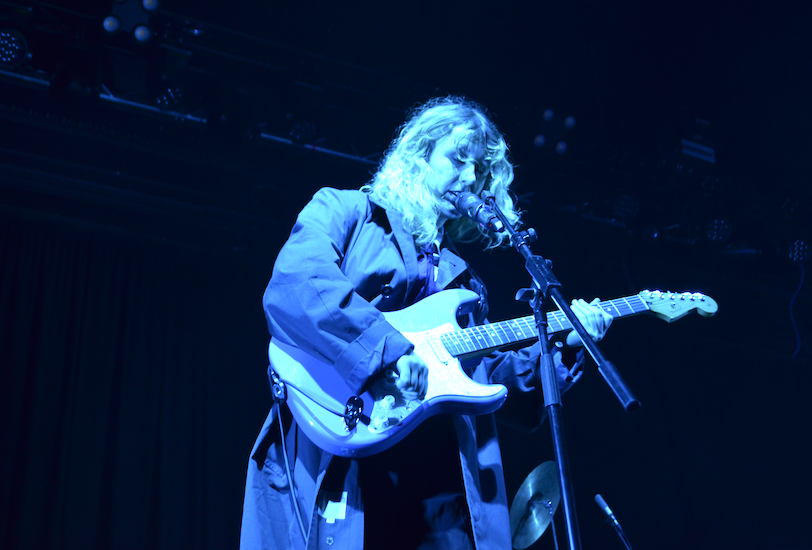
An independent singer, songwriter and producer, her vibrant, free-form musicality instantly marks her as one of the brightest musicians emerging across the R&B landscape right now. Her new album ‘T.E.O.T. II’ (The Evolution Of Taloula II) embodies authentic R&B and soul while balancing psychedelic textures co-produced by Taloula that feel as nostalgic as they are contemporary. Empowering vulnerability and the exploration of our existence, Taloula’s sonic journey towards inner peace will continue the heat surrounding one of London’s key new names crashing into wider consciousness.
1 February 2025
Words by Isaac Phelan
Currently Listening to:
As an artist part of the Yemeni and Algerian diaspora, how does this heritage influence your music and artistic expression?
Although I haven’t yet fully incorporated my Yemeni and Algerian heritage into my music, I feel that it’s something I will explore more in the future. My mother is of Yemeni descent, and I’ve always felt a connection to this heritage, especially through the traditional songs and chants I grew up hearing. I’ve thought about blending these cultural influences with genres like soul and R&B to create something unique that honours my roots while still staying true to my modern sound. I believe that as I continue to evolve as an artist, these influences will naturally find their way into my music in a more meaningful way.
What were some of the most significant changes you experienced when moving from Paris to East London, both personally and artistically?
I experienced all the changes you can imagine when deciding to start over with a new career. At 19, I wanted to move to London and make music in English with musicians. However, my first manager convinced me to sing in French and pursue pop music. This led to a huge career in France’s pop culture. I signed with Warner Music France, sold over a million albums, and won four awards for Best Female Artist. But artistically, I wasn’t connected to what I was doing. I felt like I was creating for others rather than for myself. Even though my songs had positive, uplifting messages, the artistic direction didn’t reflect who I truly was. I needed to reconnect with my soul and listen to it, so I moved to London, changed my artist name, changed management, and essentially transformed my whole life, personally and professionally. Performing with the band I met here in London finally made me feel like I was in the right place, artistically and spiritually.
Can you share some of your early musical influences growing up? Were there specific artists or genres that inspired you?
I grew up surrounded by music, as my mom was a singer and my dad played guitar. He had a band called ‘The Dollars,’ and my mom was the singer—that’s actually how they met! 🙂 We listened to a wide variety of genres at home, which is why I think my musical taste is so eclectic. I can appreciate R&B/Soul, reggae, classical music, funk, jazz, atmospheric music, hip hop, rap… and I have to be honest, as a teenager, I listened to a lot of pop music too. My number one influence has always been Michael Jackson. I’ve been a fan since I was 6 years old. Stevie Wonder is another huge influence, especially his voice, which always reminds me of my grandfather. I’ve also been a big fan of Rihanna since I was 16.
Over time, my taste has evolved. These days, I listen to a lot of atmospheric and meditation music. In terms of more recent artists, I’m really inspired by Cleo Sol and Willow Smith.
How has independence shaped your music-making process? What do you find most liberating about being an independent artist?
Being in control of every aspect of my career gives me reassurance, as I have a full understanding of what’s happening at all levels. This is something I’ve always wanted, especially from 2009 to 2018, when I was more dependent on management and major labels like Warner Music. At that time, I wasn’t fully aware of what was going on behind the scenes. I was quite naive and trusted others to handle it, as I didn’t have the time or curiosity to dig deeper.
Now, I love the freedom that comes with being independent. However, independence has its challenges. It requires a lot of time, effort, and financial resources since I have to cover all costs myself. On the flip side, working with a label gives you support, but you lose some creative control. The hardest part is finding the right people to trust. In my experience, that’s been difficult, which is why I’m still handling everything on my own.
Your debut EP, The Evolution Of Taloula, wonderfully explores sentiments of frustration, insecurity and insurmountable hope. How has your relationship with Taloula developed since this release?
I’ve gained a lot of confidence since the release of my first EP. As the name suggests, ‘The Evolution’ represents my ongoing journey to find my true self. It’s a process that isn’t always easy, especially in today’s society where we are constantly surrounded by external noise and distractions. Social media, expectations, and societal pressures can make it difficult to stay connected to who we truly are.
Since the release, I’ve learned more about what authenticity means to me, both as a person and as an artist. This process has allowed me to refine my music and focus on what truly resonates with me. It’s an evolution that continues to shape my sound and my message, and I’m excited to explore this further in future projects.
Can you tell us more about the inspiration behind your single ‘TIME IS MEDICINE’?
This song came to me very naturally. I wasn’t expecting to create a song that day when I was working with Alæ. The first thing that came out was the melody of the chorus, ‘Time is medicine,’ and the phrase kept looping in the song. Every time I listened to this loop, I felt that its repetitive nature had a healing quality, almost like a mantra. I didn’t finish it right away, but a few months later, I revisited it and realised it would be great to complete the song. That’s when I decided to collaborate with Caleb Kunle to write the verses and bring the song to life.
What does the song mean to you? How did you approach the collaboration with Caleb Kunle and Alæ for this track? What was the dynamic like during the songwriting process?
To me, ‘Time is Medicine’ is a reminder that healing can’t be rushed. The song reflects the importance of patience and allowing time to work its magic, whether it’s for emotional, mental, or
physical healing. It’s about trusting the process and understanding that sometimes, we need to give ourselves the space to grow and heal naturally. The repetitive nature of the chorus, ‘Time is medicine,’ feels like a mantra to me, something that soothes and reassures. In a fast-paced world where we often feel pressured to solve everything quickly, the song serves as a reminder that real healing takes time. By slowing down and listening to our body and mind, we can find the answers and peace we’re seeking.
Collaborating with Caleb Kunle and Alæ on this track was very natural. We were all aligned in this idea of creating a song that encourages patience and self-compassion. The dynamic during the songwriting process was fluid, and it felt like we were all on the same page in terms of the message we wanted to convey.
What draws you to the one-shot format for your music videos, and how do you feel it enhances the storytelling?
I really love one-shot videos because they feel raw and authentic. It’s similar to watching an artist perform live or attending a play, where everything unfolds in real-time without edits or second takes. This format captures a sense of immediacy and intimacy, which I feel enhances the connection with the audience. It also reflects the emotions of the song in a way that feels more genuine and organic, allowing the storytelling to come across as more personal and immersive.
How did your collaboration with Bilan Suliman come about, and what was the vision behind the visuals for ‘TIME IS MEDICINE’?
I had a dream where I was sitting on a high chair, with a hairstyle resembling a tree and a dress decorated with leaves. This imagery made me feel deeply connected to nature and grounded, which perfectly resonated with the essence of ‘TIME IS MEDICINE.’ I loved co-directing the video with Bilan Suliman and we were very aligned in our visions. We both shared the idea of shooting in black and white, symbolising the balance of yin and yang, the interplay between shadow and light. This visual contrast reflects the healing journey in ‘TIME IS MEDICINE,’ showcasing the emotional transformation throughout the song. The black-and-white aesthetic also adds a timeless quality, which I believe makes the message even more powerful and moving.
It is clear you have a first-rate support network around you. I was most interested to learn that your Aunt Ronit Gaenosar personally designed the beautiful dress you wear in the music video. How did your collaborative visions come together into this garment?
I was so moved by the dream that, while I was visiting my aunt Ronit in Florida, I collaborated with her to craft the dress I had envisioned. This was our first time working together, and it felt completely natural. It added another layer of authenticity to the visual aspect of the song, which is something I always strive for. Her personal touch on the design made the whole experience even more meaningful.
Onto the big apple. You released your debut album, T.E.O.T. II last November. How does it build on your previous work?
This album is a continuation of my first EP, ‘The Evolution of Taloula,’ which is why I named it ‘T.E.O.T. II’ (‘The Evolution of Taloula Part II’). With this album, I still feel like I’m on a journey of self-discovery as an artist. The variety in musical styles, from rap and hip hop to R&B, soul, and pop, reflects that ongoing search. I allowed myself to be more playful and experimental, and I think my pop influences came through more strongly on this album, especially in terms of structure and melodies. I wanted to embrace a more fun and carefree side of myself, which is something I hadn’t fully explored before.
The album’s message is still rooted in finding my authentic self, but with more confidence and a sense of playfulness that I didn’t have before. This project represents a moment of freedom where I allowed myself to let go and not be confined to any one genre. In comparison to the EP, I think this album feels like a more confident step towards embracing all the different facets of who I am, both musically and personally.
This latest piece of work has been distributed with Bamboo Recordings. As an independent artist, what prompted you to work with this record label?
It allows me to stay independent while getting support for distributing my music. Working with Bamboo Recordings helps take some of the workload off my shoulders, like putting the project on digital platforms, which is a huge relief since, as an independent artist, I already have a lot to manage. This way, I can focus more on the creative side of things.
What do you hope listeners take away from your music and you as an artist, especially in terms of empowerment and vulnerability?
I want people to feel that it’s okay to be vulnerable and to let their emotions flow freely. Vulnerability is not a weakness, but a strength, and I want people to embrace it fully. At the
same time, I want my music to empower listeners by reminding them that we are all unique when we listen to our inner truth. We don’t need external validation to feel powerful or confident, it all comes from within. Our thoughts have incredible power. If we believe we’re not enough, we will reflect that. But if we believe we are special, powerful, and confident, we will embody that. We become what we think, and I truly believe in that.
As an artist who has experienced so much change over the course of their career, what advice would you give to artists who are unsure of their own paths?
My advice for those unsure of their paths is not to panic. Let life guide you and give you the answers. Sometimes, when we don’t have all the answers, instead of forcing a solution, we need to let go and trust the process. Explore different avenues, and trust that the right path will reveal itself when you’re ready.